

THE special situation of the Rohingya between the conflicting parties
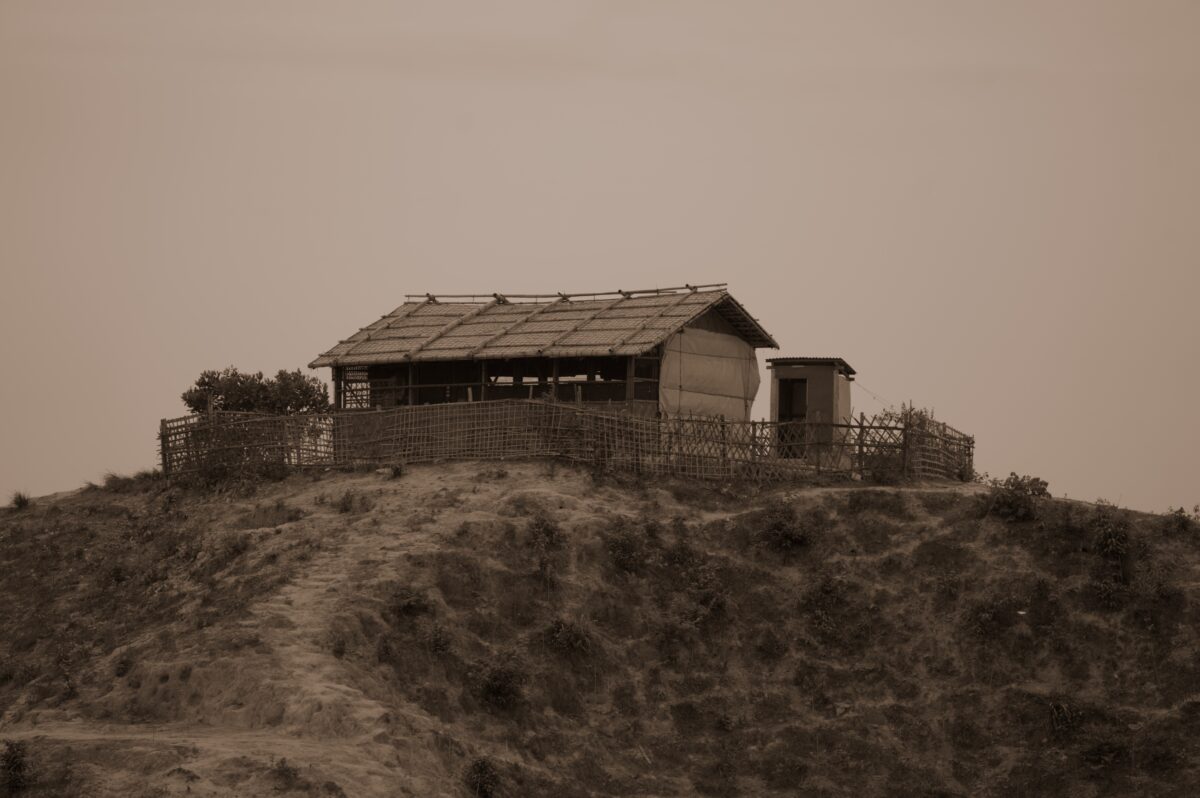
Image by Sadek Husein from Pixabay
Hopes and fears of a deprived minority in times of forced conscription in Myanmar
By Thida1
Myanmar has been unstable and chaotic since the day the military staged another Coup d’état in 2021. Violence, violations of human rights, and severe political and socio-economic crises have increasingly been beset by armed conflicts. Although the military tried to control all sectors of society and the whole country, armed resistance groups have seized more and more territory. That’s why General Min Aung Hlaing activated a dormant conscription law on 10 February 2024, making all young men and women (men aged 18 to 35 and women aged 18 to 27) across the country eligible for compulsory military service for at least 2 years. 2As of April 2026, almost 120,000 individuals have been drafted under repressive Conscription law, with the quota of 5,000 conscripts per each batch.3Those who evade military service, or help others to evade it, are subject to up to five years in prison. As a consequence, many young people, mostly young men, have fled abroad or to areas beyond the junta’s control to avoid having to fight for the widely hated regime.
The special situation of the Rohingya between the conflicting parties
However, member of minorities not recognized by the regime like the Rohingya, have few places to run to. In this context, international community and activists are particularly concerned about the Rohingya, because they are often caught between the fronts of the two warring parties: the Arakan Army, one of the most powerful ethnic armed groups in Rakhine State and the Myanmar Military. For instance, when the Arakan Army has raged up its offensive in Maungdaw and Buthidaung townships, where the Rohingya Muslim-majority populations are inhabited, the military has intensified its recruitment by targeting the Rohingya in those areas.
According to Mizzima news, the military regime has also reportedly dangled the prospect of regular wages, and, at least in some cases, the promise of citizenship.4 Hence, thousands of Rohingya are now likely serving in the Myanmar military as militia members. Certainly, most of this recruitment is forced, however, some Rohingya are enlisting voluntarily due to hope and fear, as well as the recruitment campaigns of armed groups in the Refugee Camps. Consequently, inter-communal tensions between the Arakan Army and the Rohingya community are growing in Rakhine State, as well as mutual mistrust is growing.
Denial of human rights violations and international legal prosecution
As a consequence, a steadily increasing number of alleged abuses from both, the Military Regime and the Arakan Army against the Rohingya has been reported by several media outlets5, including the UN agency6. Certainly, both the Military Regime7 and the Arakan Army8 denied the allegations of crimes against the Rohingya, although they admitted that there were incidents in which some of their soldiers broke the rules of conduct.9
Nevertheless, due to the continued effort of the Burmese Rohingya Organisation UK (BROUK) and other activists10, an application for a warrant of arrest for Senior General Min Aung Hlaing, Commander-in-Chief of the Myanmar Defence Services, for the crimes against humanity of deportation and persecution of the Rohingya before Pre-Trial Chamber I of the International Criminal Court was filed on 27 November 202411. Furthermore, an Argentinian court’s issuance of international arrest warrants for Min Aung Hlaing and other Burmese military officials involved in the alleged genocide of the Rohingya is a historic step towards justice for the Rohingya12.
In addition, universal jurisdiction cases have been initiated or explored in multiple countries, including Argentina, the Philippines, Turkey, Germany, Timor-Leste,and Indonesia13 targeting crimes committed against the Rohingya as well as abuses following the 2021 military coup. In parallel, proceedings continue at the International Court of Justice (ICJ), where a genocide case against Myanmar remains active. Additionally, in late 2024, the ICC reportedly issued an arrest warrant for Min Aung Hlaing in connection with crimes against humanity committed against the Rohingya, further intensifying international legal pressure.14
Despite these legal development at the international front, domestic political developments in Myanmar have moved in the opposite direction. In early 2026, Min Aung Hlaing was elected as the country’s next president, following an internationally criticized electoral process dominated by the military-backed Union Solidarity and Development Party.
This development raises concerns about the potential normalization of Myanmar’s military-led government despite ongoing allegations of international crimes. Several countries, including China, Thailand, Cambodia, Kazakhstan, Belarus, Nicaragua, and Russia, have extended formal congratulations, signaling a degree of diplomatic recognition. Other states, such as India, have engaged more cautiously but continue to maintain official contact.
Growing inter-communal tensions in central Rakhine
However, the situation on the ground is more complicated than everyone can imagine, and nothing is black and white. According to Dr. Maria Bagin’s interview with VOA15, inter-communal tensions are now spreading to central Rakhine after the intense conflict in northern Rakhine. Consequently, the Rohingya who live in central Rakhine are also afraid that the Arakan Army might attack them someday if the inter-communal tensions grow further, despite the Arakan Army being used to protect them.
Dr. Maria Bagin also mentions that “both communities used to live in cohabitation in central Rakhine. For instance, when there is no water in the village where the Rohingya live, the Arakan people share the water with them. After spreading the news about the Rohingya enlisting with the regime and no cooperation with the Arakan Army, the dynamic changed suddenly. There is also much false news circulating among people. Since the pressure from the international community on the Arakan Army grew further, the Rohingya were being badly treated in central Rakhine.”
Demands on the Arakan Army
The Arakan Army should responsibly govern and address communal tensions, at least in their territories. If the Arakan Army should be a responsible actor with which the international community and other key stakeholders, such as Rohingya leaders, could interact with, the critical humanitarian situation in Rakhine State would likely be addressed. Hence, the Arakan Army should fully embrace the Rohingya and work together with the international community and key stakeholders, as the fate of communal relations in Rakhine State is hanging in the balance, especially in this contested time. If a Rohingya insurgency emerges out of fear or hope, even anger against the Arakan Army, both communities will suffer bloodshed and misery.
Moreover, adopting a diversity and inclusion policy would certainly benefit the Arakan Army rather than playing zero-sum games, ensuring the Arakan Army’s cause succeeds and promoting federalisation and decentralisation in Rakhine State16. Furthermore, the Arakan Army must accept that the factor of ethnicity, including minorities within minorities, plays an important role17, especially in the case of Myanmar.
The role of international actors and the Rohingya leadership
Additionally, international actors have a role to play in containing the ongoing inter-communal tensions in Rakhine State. Protection services could undermine the recruitment campaigns of Rohingya armed groups in the camps. They should also convince Bangladesh leadership to take stronger action against armed groups’ recruitment campaigns in the refugee camps. That action will not only protect individuals from harm but also preserve the civilian character of the refugee camps. Moreover, international actors should carefully consider how they talk about communal dynamics in Rakhine State. They should speak up for the Rohingya without fuelling the violence where it is already intense.
Rohingya leaders should also fulfil their important role not only in averting further violence but also in resolving current inter-communal tensions. For instance, where there is a choice, encouraging community members not to take up arms, but rather to build relations between the Arakan Army and the Rohingya. It is also important that they don’t present potentially inflammatory information online.
Building a democratic Myanmar – together with everyone
In conclusion, the people of Myanmar should recognise the minorities like the Rohingya while fighting against the Military Regime. Giving more voice, appreciation and representation to all members of minorities will help all to build a federal union and balance the power in the federation18. Hence, encourage all concerned parties to embrace each other and build a country, where everyone enjoys her and his rights equally and lives in peace and harmony.
- The author is a Burmese Scholar and requests to stay anonymous due to a researcher risk. ↩︎
- https://www.moi.gov.mm/moi:eng/news/13043 ↩︎
- https://www.facebook.com/photo?fbid=1418680346953785&set=pcb.1418680653620421 ↩︎
- https://eng.mizzima.com/2024/05/14/9871 ↩︎
- https://www.thenewhumanitarian.org/news-feature/2024/05/27/rohingya-anti-junta-gains-myanmar-bring-fear-well-hope ↩︎
- https://unric.org/en/myanmar-many-reports-of-brutal-war-crimes-and-crimes-against-humanity/ ↩︎
- https://www.abc.net.au/news/2017-03-01/myanmar-army-defends-operation-against-rohingya/8316654 ↩︎
- https://www.irrawaddy.com/in-person/interview/aa-chief-dismisses-lies-about-crimes-against-rohingya.html ↩︎
- https://www.irrawaddy.com/in-person/interview/aa-leader-responds-robustly-to-charges-of-drug-trafficking.html ↩︎
- https://www.fortifyrights.org/mya-inv-2025-07-23/ ↩︎
- https://www.icc-cpi.int/news/statement-icc-prosecutor-karim-aa-khan-kc-application-arrest-warrant-situation-bangladesh ↩︎
- https://brouk.org.uk/argentina-court-issues-international-arrest-warrant-for-min-aung-hlaing-a-historic-step-towards-justice-for-rohingya-genocide-2/ ↩︎
- https://www.lemkininstitute.com/single-post/indonesia-s-genocide-case-shines-the-spotlight-on-myanmar-atrocities ↩︎
- https://www.icc-cpi.int/news/statement-icc-prosecutor-karim-aa-khan-kc-application-arrest-warrant-situation-bangladesh ↩︎
- https://burmese.voanews.com/a/7678732.html ↩︎
- Taylor, B.D. (2007) ‘Force and Federalism: Controlling Coercion in Federal Hybrid Regimes’, Comparative Politics, 39(4), pp. 421–440. ↩︎
- Breen, M.G. (2018) ‘The Origins of Holding-Together Federalism: Nepal, Myanmar, and Sri Lanka’, Publius: The Journal of Federalism, 48(1), pp. 26–50. Available at: https://doi.org/10.1093/publius/pjx027 ↩︎
- Samsonov, A. (2017) ‘Minorities in Dictatorship and Democracy’. Rochester, NY. Available at: https://doi.org/10.2139/ssrn.2961627 ↩︎